Ant Łakomsk
Death by Landscape
14 November 2026 - 9 January 2027

- In one of his recent interviews, Ben Lerner highlights the joy and benefit readers derive from discovering their favourite writer’s favourite writer. One body of work may lead to another, and that one to yet another, thus creating an idiosyncratic map of inspiration – an alternative hierarchy to the canon. Ant Łakomsk enjoys art; her favourites are artists working in various media, with diverse biographies and levels of recognition. Among them, to name but a few, are Sophie Podolski, Marc Camille Chaimowicz, Charlotte Salomon and Zoe Leonard. Their first names and/or surnames appear in the titles of the works, and motifs drawn from their work are often paraphrased by Łakomsk.
- It seems significant and natural in this context that the artist has named her exhibition after a short story by Margaret Atwood, but Łakomsk actually borrowed the title from another author, Elvia Wilk, whose essay of the same name contains a brilliant analysis of the figure-ground relationship (in literature). Atwood’s text tells of the mysterious disappearance of a friend (during a canoeing trip), but also of coping with a sense of loss through the obsessive collection of images. The elderly narrator in the story lives in a flat filled with painterly representations of the forest. She stares at them for hours, as if, through them, she were trying to solve a mystery from the past and bring her friend’s lost presence back to life. “There are no backgrounds in any of these paintings, no vistas; only a great deal of foreground that goes back and back, endlessly, involving you in twists and turns of tree and branch and rock.”
- Łakomsk’s latest paintings are conceived in a similar way, even though they depict an urban landscape. The views are obstructed not by dense woodland, but by multiple layers of objects. Furniture, household appliances, shop windows, walls and lorries obscure the view and each other, whilst human figures seem to blend into them, vanish and transform into objects. Łakomsk reduces the illusion of depth – on the surface of the painting, every element is equal (“only a great deal of foreground”). However, as Wilk observes, “…it is not a death at all. It’s transition… The figure becomes part of the landscape, and so the landscape becomes a kind of figure”.
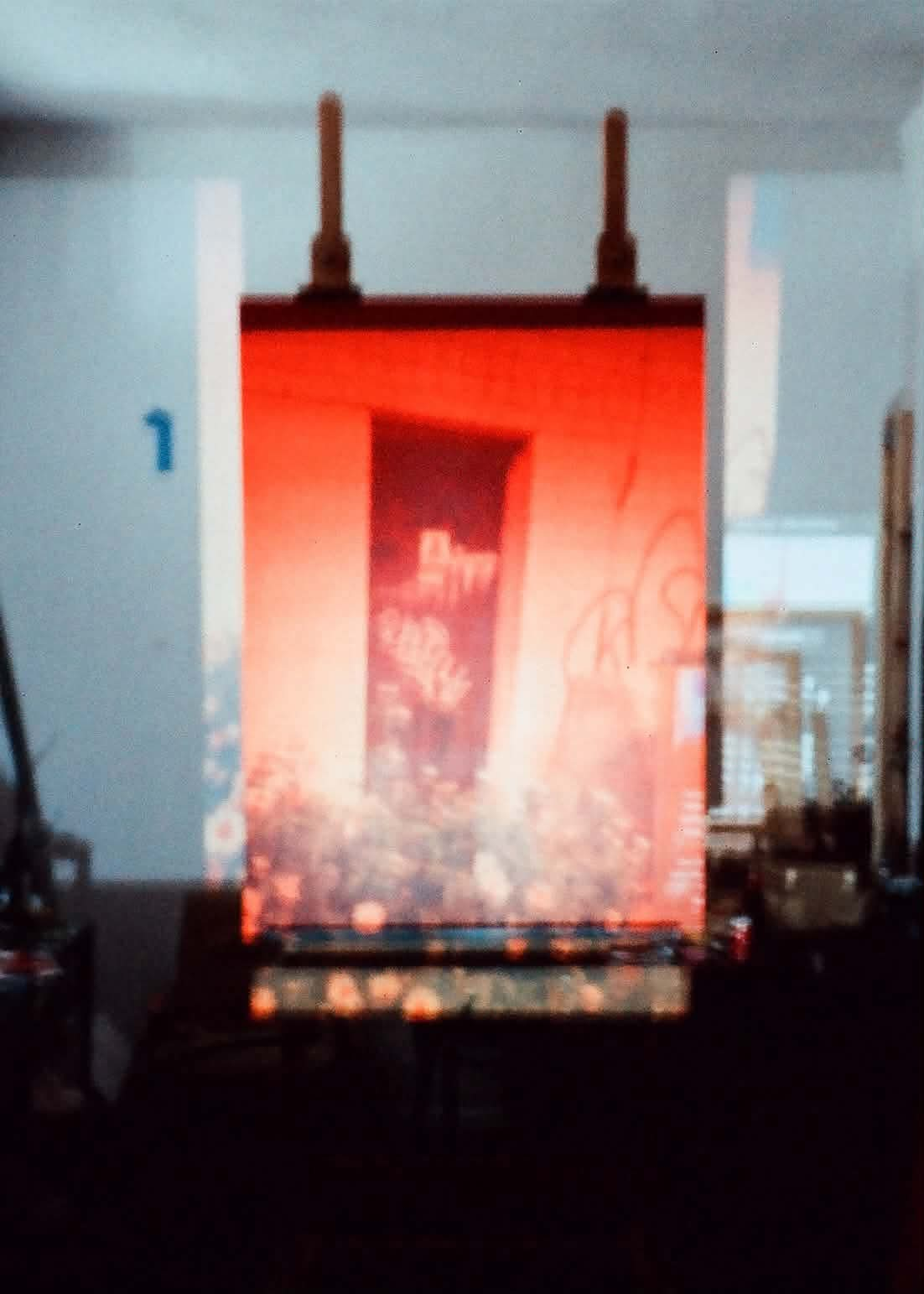
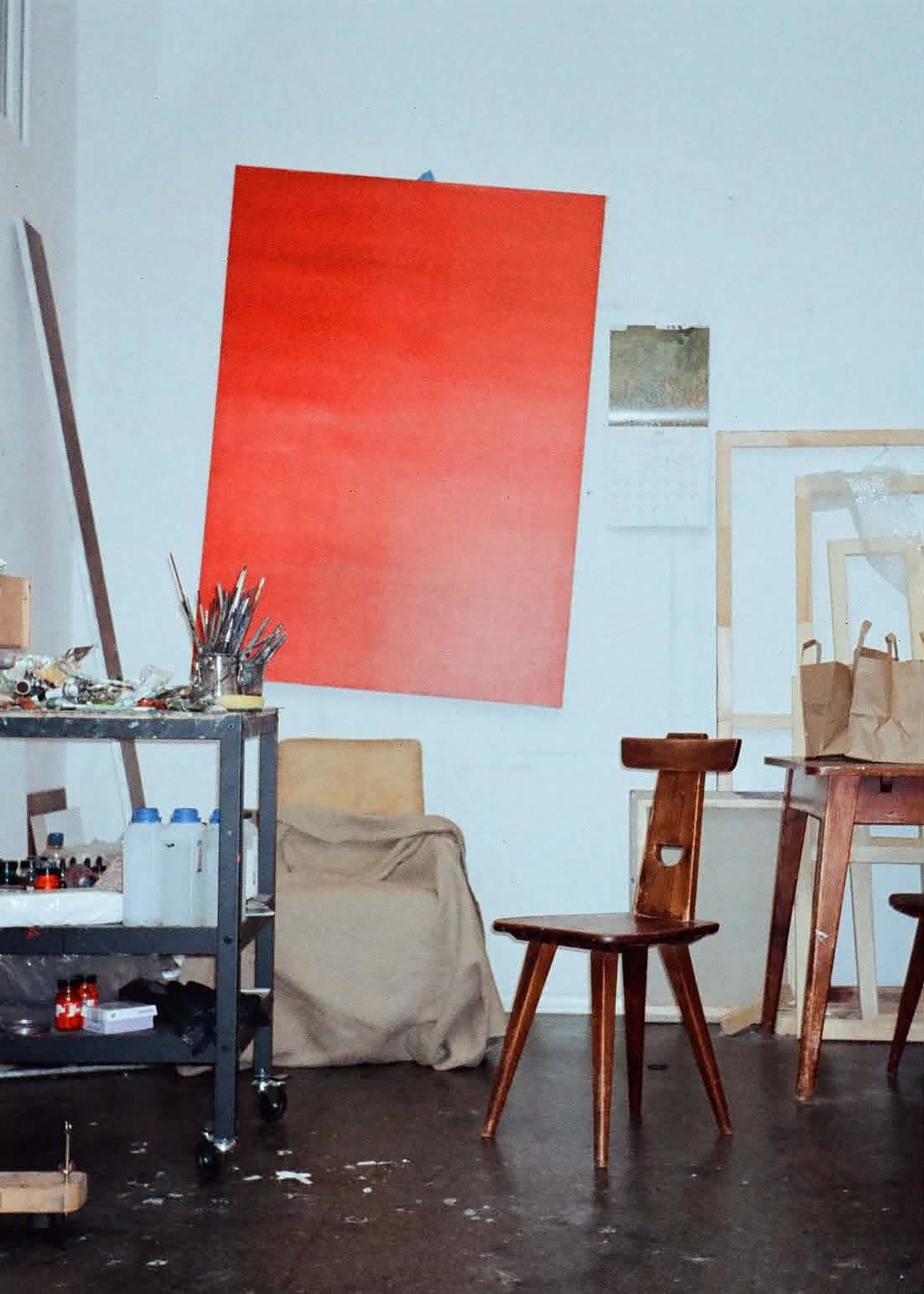
- The large painting Landscape and Furniture Disassembled (2026) brings to mind a geometrised landscape, yet it is constructed from the flat surfaces of dismantled furniture arranged at random into an abstract composition. This painting is based on a photograph taken by the artist of a large rubbish bin near her studio. By analogy with the figure-ground relationship, Łakomsk is interested in the relationship between art and reality. By including a series of analogue photographs in the exhibition, the artist conveys the mediated nature of her paintings. As she herself states: “a painting always refers to what we have seen, even if it is abstract”. Photography thus serves as a stopping point in the process of image transformation. A separate group of photos in the exhibition – apart from those with afterimages in the paintings – consists of images from the studio in redscale. The darkroom simulated in this way may symbolise a place where the visible is treated with particular care, along with the condition of its existence – light.
Michał Lasota - (Translated by Agnieszka Matkowska. Editing by David J. Rix)